
· by Michael Blair, Nashville's Deck
A Nashville winter does not bring much snow, but it brings enough freezing rain and frosted boards that a back deck becomes the most slippery thing between the kitchen and the yard. The first instinct is the bag of melt left over from the driveway.
Whether that bag is safe on the deck depends on what the boards are made of and whose name is on them, because the composite makers do not all say the same thing. Below is what Trex, TimberTech and Fiberon each publish, how snow should come off without voiding a warranty, and what salt does to the metal framing hardware that nobody sees.
Can you use ice melt on composite decking?
Yes, and calcium chloride is the one product the three largest composite makers all accept. The TimberTech care and cleaning guide says calcium chloride melts will generally not harm the boards, adds that they can leave a white residue, and says to clean that off as soon as the weather allows. Trex’s care page names calcium chloride too, and so does Fiberon’s article on snow and ice removal.
Rock salt is where they part ways. Trex says calcium chloride or rock salt will melt ice on its boards and should be rinsed off when first practical, and Fiberon lists rock salt as acceptable as well. TimberTech tells owners to keep rock salt, and any gritty melt, off its boards. Since a warranty follows the maker’s own care sheet, the name stamped on the end of your boards decides which rule applies. If you do not know what you have, calcium chloride is the choice that fits all three.
How should snow come off a deck?
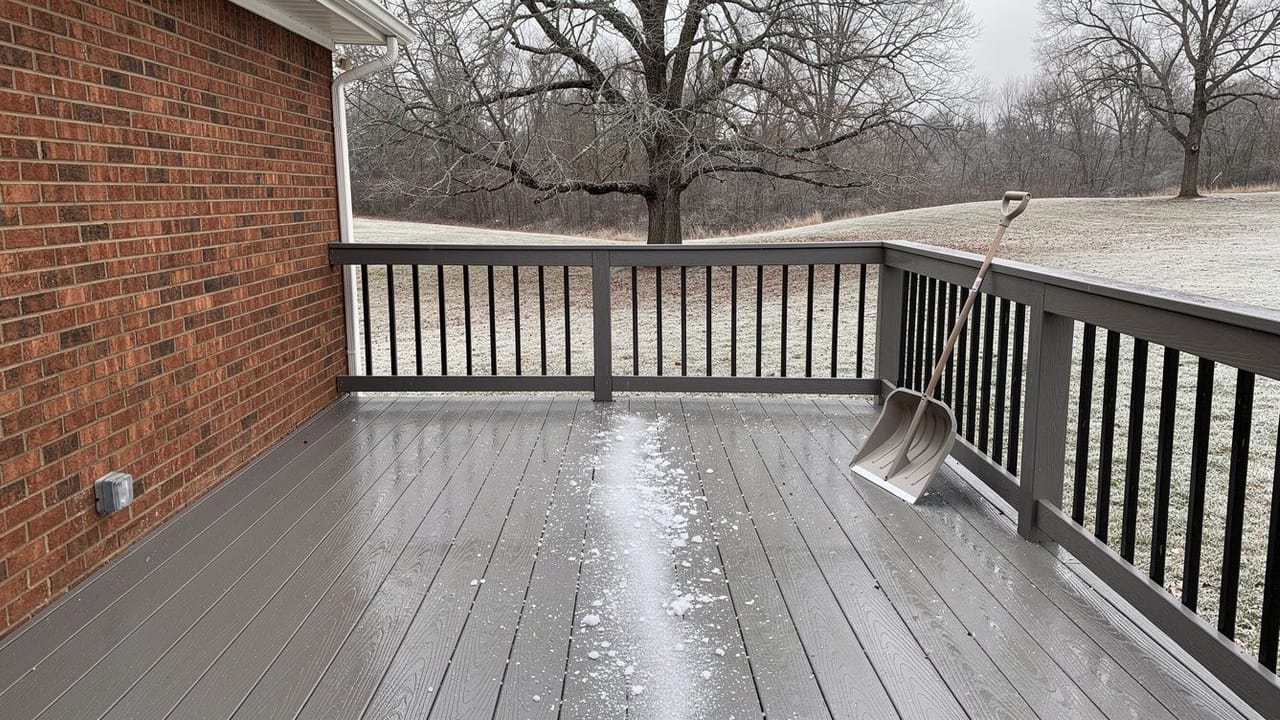
With a plastic shovel or a broom, pushed along the length of the boards. Trex says never to use a metal snow shovel on its decking and warns that a shovel scratch is not covered under warranty. TimberTech rules out plastic shovels with a metal leading edge as well. Fiberon says to shovel parallel to the boards, because pushing across them is how a blade catches a board edge, and it suggests a leaf blower for a light dusting.
Two things never belong on a composite deck. One is an ice chipper: Fiberon says not to use one, even a plastic one, because the damage can be permanent. The other is sand, which Fiberon calls abrasive enough to damage the surface. It also warns that ice melts with added dye can stain composite and PVC boards, so the blue or green pellets sold for sidewalks are worth leaving in the garage.
What does salt do to the hardware under a deck?
It speeds up corrosion of the steel that holds the deck together. Whatever melt goes on the boards drains through the gaps onto the joist hangers, ledger fasteners and post bases below. Simpson Strong-Tie’s stainless steel guidance lists salt used to de-ice or melt snow among the common factors that corrode steel, alongside preservative-treated wood, and it recommends Type 316 stainless where de-icing salts are present.
Its corrosion guide for wood connectors and fasteners names chlorides among the materials that contribute to corrosion. Calcium chloride is a chloride as much as rock salt is, so even the product the board makers approve is something to use sparingly. That matters most at the ledger, where the deck hangs on the house, and rust streaks below its fasteners are one of the warning signs in our post on the part of a deck that actually fails. A wood deck carries the same hardware, so the same restraint applies to treated pine.
Cleaning up after the thaw
Once the ice is gone, sweep up the leftover granules and rinse the boards. Fiberon suggests sweeping and discarding the melt first, scrubbing any buildup with water and a non-metal deck brush, and hosing the deck down when warmer weather returns. That keeps the white film off the boards and keeps the salt from being tracked indoors.
If a winter of shoveling has left scratches, or the hangers under the deck show rust, that is a deck repair visit, and a composite deck we build is laid out so the boards run in the direction a shovel will travel. We work on decks across Nashville and Middle Tennessee. Ask us to look at yours before spring.
Sources
- Trex, How to Clean a Trex Deck (care and cleaning) — Calcium chloride or rock salt will melt ice on Trex decking; rinse off when first practical; never use a metal snow shovel; shovel scratches not covered under warranty
- TimberTech, Care and Cleaning — Most calcium chloride products can be used without damage and may leave a white residue; avoid rock salt and abrasive ice melts; no metal shovels or plastic shovels with a metal leading edge
- Fiberon, Snow and Ice Removal on Composite Decks — Calcium chloride ice melt or rock salt; shovel parallel to the boards; no metal shovels, sharp tools or ice chippers; sand is abrasive; colorant dyes can stain; sweep and rinse after
- Simpson Strong-Tie, Stainless Steel — Salt used to de-ice or melt snow listed among common corrosive factors; Type 316 recommended where de-icing salts are present
- Simpson Strong-Tie, Corrosion: Wood Connectors and Fasteners — Chlorides and preservative-treated wood among the contributors to corrosion of connectors and fasteners
FAQ
Ice Melt on a Composite or Wood Deck: What Is Safe — questions
Can you put salt on Trex decking?
Trex says calcium chloride or rock salt will melt ice on its decking and should be rinsed off when it is first practical. It also says never to use a metal snow shovel on Trex, and that shovel scratches are not covered under its warranty. A plastic shovel or a broom is the safe tool.
What ice melt is safe for composite decking?
Calcium chloride is accepted by Trex, TimberTech and Fiberon alike. TimberTech says to avoid rock salt, while Trex and Fiberon allow it. Skip any melt with added colorant, which Fiberon warns can stain composite and PVC boards, and skip sand, which it calls abrasive. Rinse the residue off once the weather warms.
Will salt harm my wood deck?
The clearest concern is the steel underneath. Simpson Strong-Tie lists de-icing salt among the common factors that corrode steel and recommends Type 316 stainless where de-icing salts are present. Salt on a wood deck drains onto the joist hangers and ledger fasteners, so use as little as the ice requires and rinse it off afterward.
Can you use a metal shovel on a composite deck?
No. Trex says never to use a metal snow shovel on its decking, TimberTech says metal shovels and plastic shovels with a metal edge damage its surface, and Fiberon says never to use metal shovels or sharp-edged tools. Use a plastic shovel or a nylon broom, pushed along the boards.
Does colored ice melt stain decking?
It can. Fiberon advises against ice melt with added colorant because the dyes can stain composite and PVC decking. Plain calcium chloride without dye is the safer pick, and any white residue it leaves can be cleaned off with water and a soft, non-metal brush once temperatures allow.