
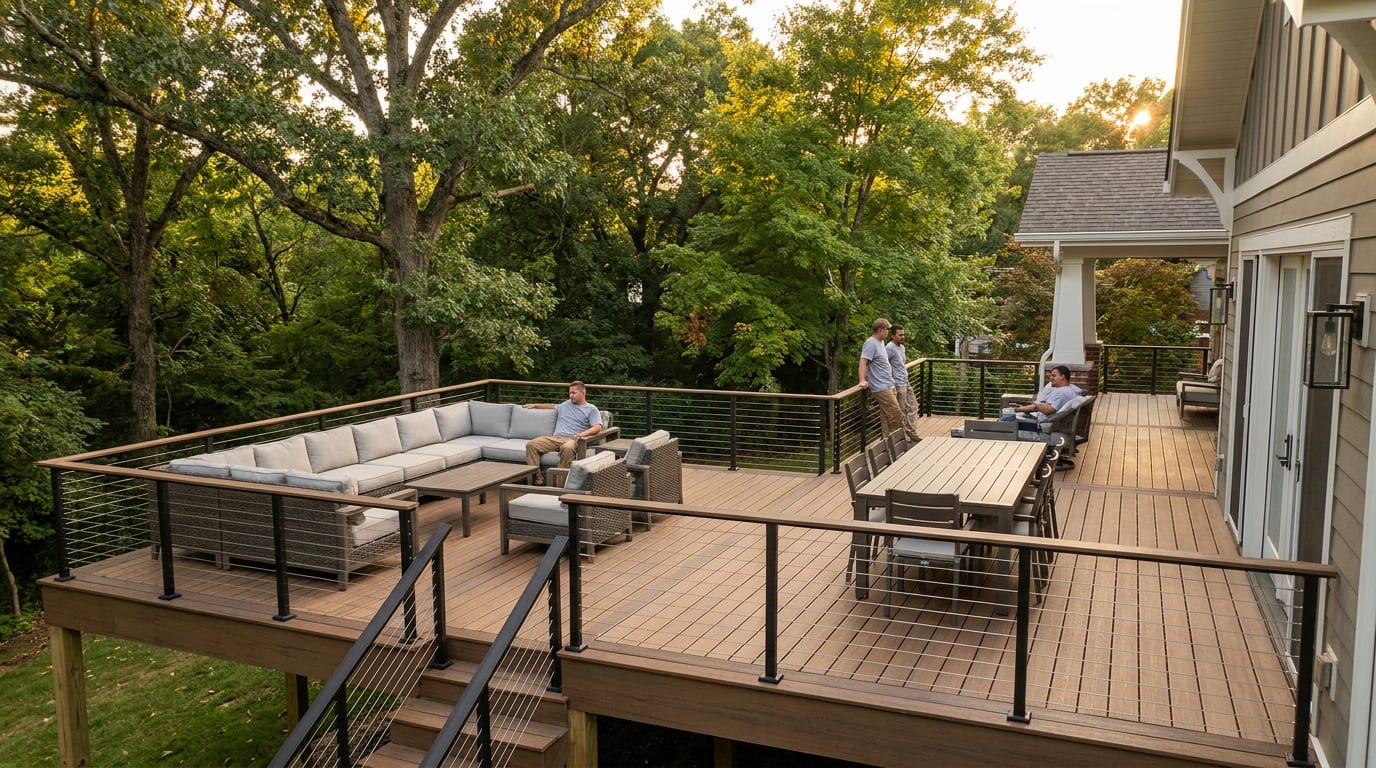
· by Michael Blair, Nashville's Deck
Deck failures are overwhelmingly ledger failures — the board bolting the deck to the house lets go, and the whole structure pulls away. It is also the connection most often built wrong, particularly on decks added by a previous owner.
The ledger connection
A ledger must be bolted through the rim joist with structural bolts or lag screws in a specified pattern. Nails alone are not adequate and never were, though plenty of older Nashville decks are built that way.
It also needs flashing above it so water running down the wall goes over the ledger rather than behind it. Without flashing the ledger rots from the back, invisibly, until it fails.
What to check yourself
Push hard against the rail and against a post. Movement at the house end is the serious one. Look under the deck at the ledger for staining, soft wood or rust streaks from corroding fasteners.
Check posts at ground contact, where rot starts, and check that they sit on footings rather than on the soil or a paving slab.
- Ledger bolted, not nailed, with flashing above
- Posts on proper footings below frost depth
- Joist hangers with the correct hanger nails, not roofing nails
- Guardrail posts bolted through, not lag-screwed into end grain
- Stair stringers supported and not cut through
Guardrails and stairs
Guardrail posts fastened only with lag screws into the end grain of a joist are a common and dangerous shortcut. Rails should resist a substantial lateral load, and end grain holds fasteners poorly.
Stairs are the other frequent problem: stringers cut too deeply lose strength, and a missing handrail on more than a few risers is both a code issue and the most likely place someone falls.
Middle Tennessee specifics
Our humidity keeps the underside of a deck damp, and decks built close to grade with no airflow rot fastest. Ground contact rated lumber matters for anything within six inches of soil.
Carpenter bees are the other local factor, boring into unfinished framing and rails and inviting woodpecker damage behind them.