
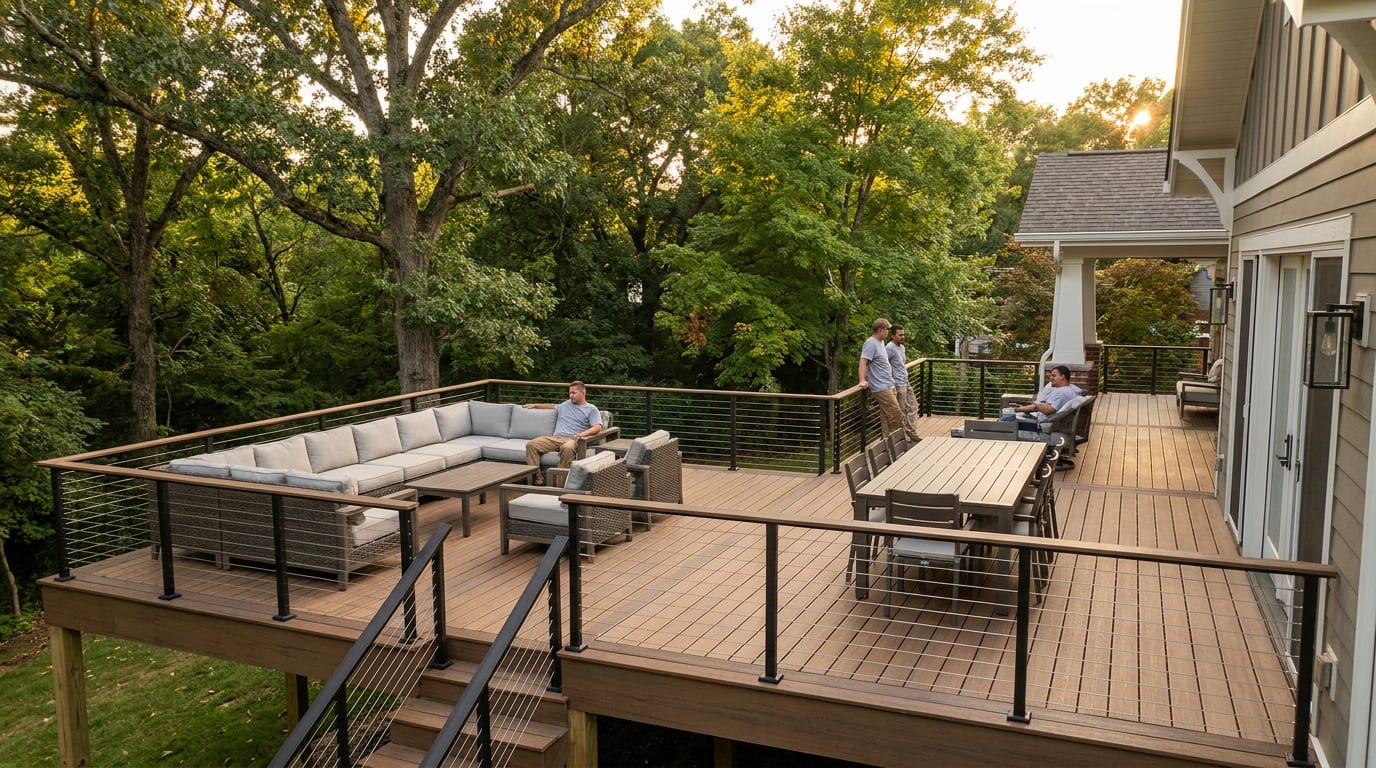
· by Michael Blair, Nashville's Deck
Leaf drop in Middle Tennessee runs from early October into December, and a deck under a couple of mature oaks can be covered several times over. A layer of dry, crisp leaves that blows around does no harm. A wet mat of them, left through a few rains, does three things: it leaches dark tannin stains into the boards, it holds moisture against the surface long enough to grow mildew, and it packs into the gaps between boards so water stops draining off the frame. Each is easy to prevent and slower to undo.
What wet leaves do to the boards
Leaves, oak leaves in particular, contain tannins that dissolve in rainwater. On a light gray or tan composite, or on wood that was recently cleaned or stained, that tea-colored water dries into brown shadows shaped like the leaves that made them. Walnut hulls, acorns and the catkins that come down in spring do the same thing, often darker.
The moisture is the other half. A leaf mat keeps the board beneath it wet for days after the rest of the deck has dried, and that is exactly the condition mildew needs. On a wood deck it also softens the surface and eats into the finish, and the patch under a planter or a pile of leaves in the corner is usually the first place a wood deck starts to gray and check.
The gaps between the boards matter more
The spaces between deck boards are there so water runs straight through and the joists underneath can dry. Leaves and the grit that comes with them pack into those gaps, and once they are blocked, water sits on the top of every joist and in the space where boards cross the frame. That is where wood decks rot from the inside, and a composite deck on a treated frame is no exception, because the frame is still wood.
The same debris collects wherever the deck meets the house. If the flashing over the ledger board is buried under wet leaves all winter, it is holding water against the one connection the deck hangs from. Clearing that line is the most useful five minutes of fall deck care.
Clearing leaves without scratching
A leaf blower is the best tool for a composite deck, because metal rake tines and stiff push brooms can scratch the capped surface that protects it. On wood, a plastic leaf rake is fine. Doing it after each heavy drop, rather than once at the end of the season, keeps the mat from forming at all.
Once the trees are bare, clean out the board gaps. A putty knife or a thin gap-cleaning tool pulled along each seam lifts out what has packed in, and a rinse with a garden hose afterward shows where water is still sitting. Low decks close to the ground deserve a look underneath as well, since leaves blow in and pile against the posts and the lowest joists, where they stay wet all winter and give mice somewhere to nest.
- Blow leaves off after each heavy drop, especially before rain
- Move planters, rugs and furniture so boards under them can dry
- Clear the board gaps once the trees are bare
- Keep the ledger flashing and the area against the house clear
- Clean the gutters above the deck so they do not overflow onto it
Getting tannin stains out
On wood, a deck brightener made with oxalic acid is the usual remedy for tannin stains, and it also restores color after cleaning. On composite, start with the cleaner the decking manufacturer recommends, since some approve oxalic acid products and some specify their own, and using the wrong one or a pressure washer can affect the warranty. Try any product in a spot under the grill or a chair first.
Light stains on composite often fade on their own with a season of sun and rain, and many are gone by spring. The deeper marks under something that sat for months take a cleaner and some scrubbing. When we look at a deck in the fall, the stains are cosmetic; the blocked gaps and a buried ledger are what we point out first.